Episode 29

Designing for Trust: Customer Experience, Bias & the Human–Automation Balance

Parallel Entrepreneur with Mark Cleveland · Episode 29

0:00 / 13:14
Designing for Trust: Customer Experience, Bias & the Human–Automation Balance
0:00 / 13:14

Episode notes

Great experiences don’t happen by accident. They’re designed.

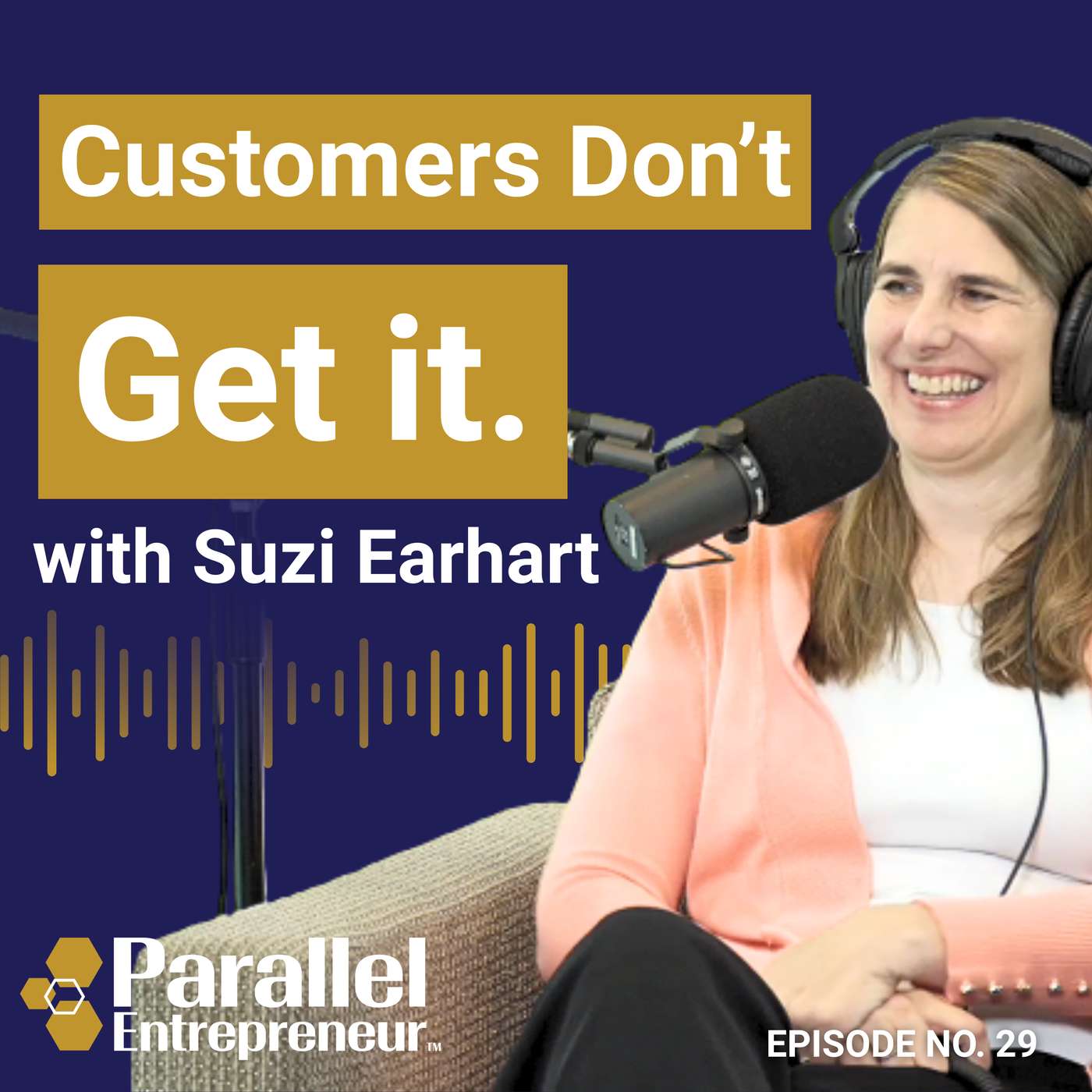
In this episode of The Parallel Entrepreneur – Innovation Series, Mark Cleveland and Johnny Anderson sit down with Suzi Earhart, CCXP, a Customer Experience and Organizational Change executive who believes better experiences begin with intentional design, empathy, and mutual understanding — and end in measurable business results.

Suzi started her career in computer science before realizing something foundational: technology alone doesn’t create great outcomes. People, process, and technology must work together. And if they aren’t aligned around the customer, trust quietly erodes.

This conversation goes beyond surface-level CX talk. We explore how leaders unintentionally design from the inside out, how unconscious bias limits true “outside-in” thinking, and why deciding between human, assisted, or self-service interactions is one of the most strategic trust decisions a company makes.

In this episode, we discuss:
- Why incentives today are tied to identity and belonging
- The challenge of truly thinking “outside-in”
- How culture and bias distort customer-centered design
- The difference between human, assisted, and automated experiences
- Why innovation requires structured change management
- Assessing whether employees are truly set up to deliver quality
- How aligned CX creates both financial and relational wealth

At just over 12 minutes, this episode delivers practical insight for founders, operators, and leaders responsible for shaping experience at scale.

About the Guest

Suzi Earhart, CCXP is a Customer Experience and Organizational Change executive based in Denver, Colorado. She is passionate about improving experiences through intentional design, empathy, and mutual understanding — outcomes she believes must ultimately be proven in business results.

Beginning her career in Computer Science, Suzi quickly recognized that sustainable innovation requires alignment across people, process, and technology. Her work focuses on helping organizations think like their customers, challenge unconscious bias, and intentionally decide when to use human, assisted, or self-service models.

She holds certifications in change management and has led initiatives including:
- Strategic and technology roadmaps
- Journey mapping and Voice of the Customer systems
- Service delivery redesign
- Organizational change management programs
- Governance system creation
- Employee capability and “do-ability” assessments

Throughout her career, she has remained committed to servant leadership and mentoring — helping others reach their full potential while building systems that deepen trust and results.

Connect with Suzi here: Follow Suzi on LinkedIn

About the Hosts

Mark A. Cleveland
Managing Director at Kensington Park Capital, entrepreneur, M&A advisor, and host of the Parallel Entrepreneur Network
Follow Mark on LinkedIn

Johnny Anderson
Nashville tech leader, GNTC board member, Entrepreneur-in-Residence at the Entrepreneurship & Innovation Center, and host of The Impodsters™
Follow Johnnyonbrand on LinkedIn

Links & Resources

👉 Learn more about the Entrepreneurship & Innovation Center (EIC):
wcs.edu

👉 Join the Parallel Entrepreneur Network:
parallelentrepreneur.com

👉 Subscribe for more conversations with leaders building aligned systems across business, education, and community.

👍 If this episode resonated, leave a comment or share it with someone shaping the future of leadership.
Chapters
00:00:00 Incentives, Identity & Brand Association
00:00:49 Episode Introduction
00:01:41 Suzi’s Background: Tech, People & CX
00:02:00 Why Innovation Demands Change
00:04:01 Brand as Identity & Belonging
00:05:01 The Full Customer Ecosystem
00:06:00 Designing Platforms Customers Struggle With
00:07:00 Fitting Into the Fabric of Customers’ Lives
00:09:00 “Our Customers Don’t Understand”
00:10:01 Perspective, Bias & Trust Decisions
00:12:01 Innovation as Intentional Design

Chapters

  1. Incentives, Identity & Brand Association
  2. Episode Introduction
  3. Suzi’s Background: Tech, People & CX
  4. Why Innovation Demands Change
  5. Brand as Identity & Belonging
  6. The Full Customer Ecosystem
  7. Designing Platforms Customers Struggle With
  8. Fitting Into the Fabric of Customers’ Lives
  9. “Our Customers Don’t Understand”
  10. Perspective, Bias & Trust Decisions

Full transcript

Understanding that incentive is now who do people think about when I'm around them? If I'm wearing a Jersey of my favorite team, if I'm shopping at a particular store I'm now associated with the values of that. That becomes as much of an incentive as all the typical perks and financial

Great experiences don't happen by accident they are designed. Susie Earhart is a customer experience and organizational change executive. Who spent her career helping organizations align people, processes and technology around what customers actually experience. In our conversation today Susie unpacks two things leaders consistently underestimate; 1. how difficult it really is to think outside your own biases when designing for customers, and 2. how choosing between human assisted or automated experiences can either build trust or quietly erode it. This is a practical

human conversation about designing with intention, so let's dive right in. I just love being in roles, whether it's the actual job itself or the type of function that I'm doing that enables somebody to see what they can do with their life. And the impact that they're making on others and then suddenly do something that they didn't even think was possible.

So I love that. I've decided to do that kind of work primarily through customer experience consulting but I do a little bit of organizational change management consulting as well. Because guess what if you wanna innovate if you want to focus more on your customers you need to be willing to change. And change is not always the easiest things that we do, so understanding the methodology and psychology behind that is a big part of why I Learned those things in addition to my customer experience work.

I love that and the psychology of it. What are what are three questions you ask a client when you're trying to figure out what's wrong and how you can help? Well, first of all I don't always assume it's wrong. Right, because when you say what's wrong it puts people on the defensive. So the first thing I usually say is why am I here?

What is it that you want that you don't have today? Right, so I open that possibility of that discussion so that's the first. And then I always ask why? Thank God for Simon Sinek, he taught me a lot right? But if you don't know the 'why' then you can't get to all of the other things that trickle down of what are the implications, and what are you willing to do about it and those types of things.

The third thing I usually ask is what are the hot buttons? What are the areas that don't cross, don't touch? This is who I am, this is who we are as a company or an organization or an entity. Because a lot of times people come forward very excited about doing something innovative or doing a different way of working. But then when you get close to that moment they all jump back and they're like no, no, no don't touch that.

So those are the questions I typically ask to start. Take you back to your first statement then. You use the term customer experience what does that mean? Customer experience is basically defined as every impression that someone has about an organization, or a brand. It's everything from what's the signage that I see out there, all the way through to what was my interaction with somebody who worked with the company.

And that interaction could be on the street, like I happen to run across them and they were wearing a T-shirt with the logo and gave me a judgment about them because the way they behave there. Or it could be related to I called them for help on their particular product they sold and what was that like. I think there's a book I read, eons ago something about sacred cows make the best burgers You've got. You were touching on that, like I'm not gonna judge what's right or wrong here I'm gonna observe. But through the eyes of a customer and are you bringing is a one of your superpowers to bring the the viewpoint the view the perspective of a customer to your client?

It's absolutely one of my superpowers, And I call it outside in, people in our industry talk about it's not what I see in my own mirror it's what other people see when they're looking at you from all those different angles. And that outside in is not just a customer it's also your employees, it's the partners that you work with you co sell with, it's your suppliers the people who come and quote drop off the things that you need to do work and how you treat them. It's all of the above. Yeah, it's like a holistic approach to relationships.

I think we've been speaking a lot about relationships and community through the course of these conversations. Give us a little bit more background of what it was that set you in this direction? I heard your why, but I wanna understand a little bit more about the how? So what caused me to join a focus on customer experience is because I was working in contact centers for a large part of my life.

And the last two contact centers I ran, actually last three, everybody came to me and said here's the problem with your organization. And they told me we stunk. We were horrible. We were the you know, the forgive me the c*@p that's the nice way of saying what's in my head. The c*@p of the organization, and when I looked and stepped back I realized that the technology people were designing a platform that our users didn't understand how to use, that our marketing people were pitching a potential of what we could do that we couldn't do. Our sales people were making commitments of how we could serve them that were unrealistic. And so what was happening is

all of these impressions were being set up about the brand about who we were as a company, and then they all they'd all walk away and ask me why I couldn't deliver on it. So that's why I started working up, because customer experience again is every impression of the brand. So if you produce that beautiful image of that juicy hamburger on that sign, you better make sure that the employees in the store can make that juicy hamburger every single time you go through the drive through.

But also with a pride a sense of accomplishment and their reward. How does rewards fit in? I believe that incentives rule the world fundamentally like end of story. And how does it how do incentives and rewards and motivations you know fit into the fabric of of how you're trying to solve I guess create opportunity for people to express themselves better? Yeah, I love that statement, because if I look back 15 years I would have been more aligned with the incentives like what is the financial incentive?

What is the bonus? What is the opportunity to grow my career path etc? And what we've really happened, at least in the American space in the past five years is that a lot of the dynamic is around who do I want to be associated with, right? What does that brand stand? For like Target for example, right they had this huge boycott against them at the beginning of the year.

Because they made a decision, a business decision. And so understanding that incentive is now who do people think about when I'm around them? If I'm wearing a Jersey of my favorite team if I'm shopping at a particular store I'm now associated with the values of that. That becomes as much of an incentive as all the typical perks and financial.

More holistic approach I love it. More holistic approach. Holistic So speaking of approaches, the first time I heard CX as a concept or as a term, there was a question that was asked directly after and it was what are the resources you're putting towards your customer experience? And I think some of the things that you detailed out is, I realized we have focus in selling and selling and delivering.

We have focus in building the product and and offering the product. But what is it that makes companies lose sight of the fact that there's an entire journey that the customer takes, that interacts with every bit of your product, what creates that lack of focus, on the actual experience that the customer has? I don't think I can tell you any one thing, I mean the reality is we get stuck in our communities we know the people that we work with so well so close that we get stuck in our ways.

The last company I worked for, I remember them saying our customers just don't understand how this works. It's like well... they're the ones buying, so let's make sure that we're. Not buying. Yeah, yeah. well that was the whole point They weren't buying after a little while. So there's a whole myriad of reasons. It's really about making sure that you step outside of your community, out of your mindset.

Which is where I think innovation fits in in a great way, it causes you to step back and say if I was gonna do this, what would I need? What do I want and how do I feel? And even better actually talk to the customers who you are having buy your services or your products. And ask them why they're staying with you or why they're leaving?

You'd be amazed at what you learn. I think that's a sin talking directly to your clients, I didn't know that that's an option. Yeah, it is strange right? I mean if you could look at it with a different metaphor, you could say I'm I'm wearing blinders I'm a horse I'm going forward I have blinders for no distractions and that's your perspective.

All right, what happens when you take the blinders off or what happens when you reorient, and you I think? You're bringing perspective into this decision making, business making, value creating thing that we call business. I'm getting the sense that it's about expanding and reorienting, and and building your your perspective.

It's that and, so you know decades ago we said certain companies succeed because they always produce the same product every time, every way. Other companies succeed because they're so focused on innovation they create new things that everybody's excited to run to, and wait outside in long lines to get. Right, and then there's companies who highly personalize.

In the United States in the past really five to 10 years, we as consumers have become so conditioned, that I can get what I need from Amazon in an hour, right? So speed is there. I can hop on the phone call and for example USAA knows exactly everything about my portfolio and knows how I want to be talked to and can make this feel like I just knew.

Like this other person on the phone that I've never spoken to they've known me for 15 years. Those types of expectations around speed around personalization, around the product matching my needs exactly, have become so ingrained that it's not just having perspective, it's that we need to meet those minimum standards no matter who and what company we're working with.

Otherwise I'll leave you and go someplace else. Well if you're delivering that message to me, I'm gonna pay attention. So what's the, what's the question you'd like for us to ask you that we haven't asked? How does innovation connect to customer experience? All right consider that a softball. Thank you very much. Proceed. Yes.

What I find fascinating about innovation is it usually starts with the emotion of frustration or anger about things not working the way I want them to. And that creates an opportunity for you to associate and connect with other people who have that shared perspective, that shared need, and that shared desire. And that innovation then evolves itself into something that more and more people adopt.

I think that's as good a place as anywhere to... We dropped the mic on that one. Thanks for joining us Susie. That was the money shot

Building more than one venture?

The Parallel Entrepreneur Network is a private, vetted community of founders running multiple companies at once. New to the idea? Start with what a parallel entrepreneur is.

Apply to the Network

← All podcast episodes